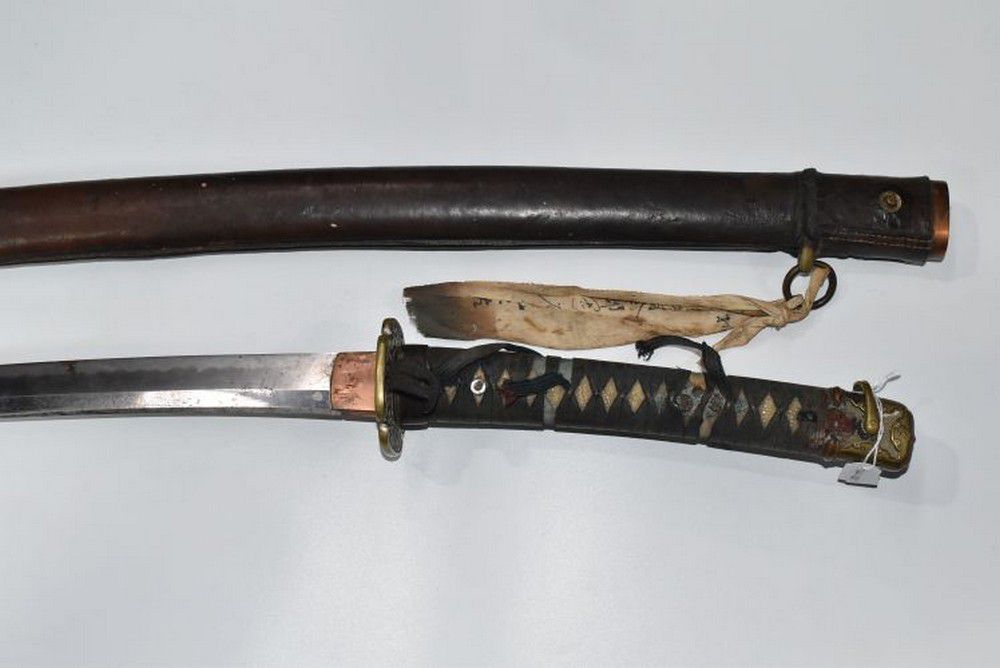
WWII Japanese Samurai Sword with Leather Scabbard & Shagreen Handle Edged Weapons Militaria
A good quality Japanese katana sword by Hokke Saburo Nobufusa (1909-2000), overall length 10.1 cm. Nobufusa was arguably one of the top 30 sword smiths during World War II when this katana was made, as indicated by his ranking of 2.5 million yen.
WWII Japanese Army Officer Sword Chounsai Emura Gendai Katana Warpath
2. The Type 95 Shin Guntō. The Type 95 sword or NCO sword, as its name suggests, was designed for use by NCOs (non-commissioned officers) and was introduced in 1935, prior to the Second World War. It had resemblance to the officers shin guntō katana, but was specifically designed to be cheaply mass produced.
DS World War II Japanese Naval sword with curved blade and starburst tsuba, cotton wrapped
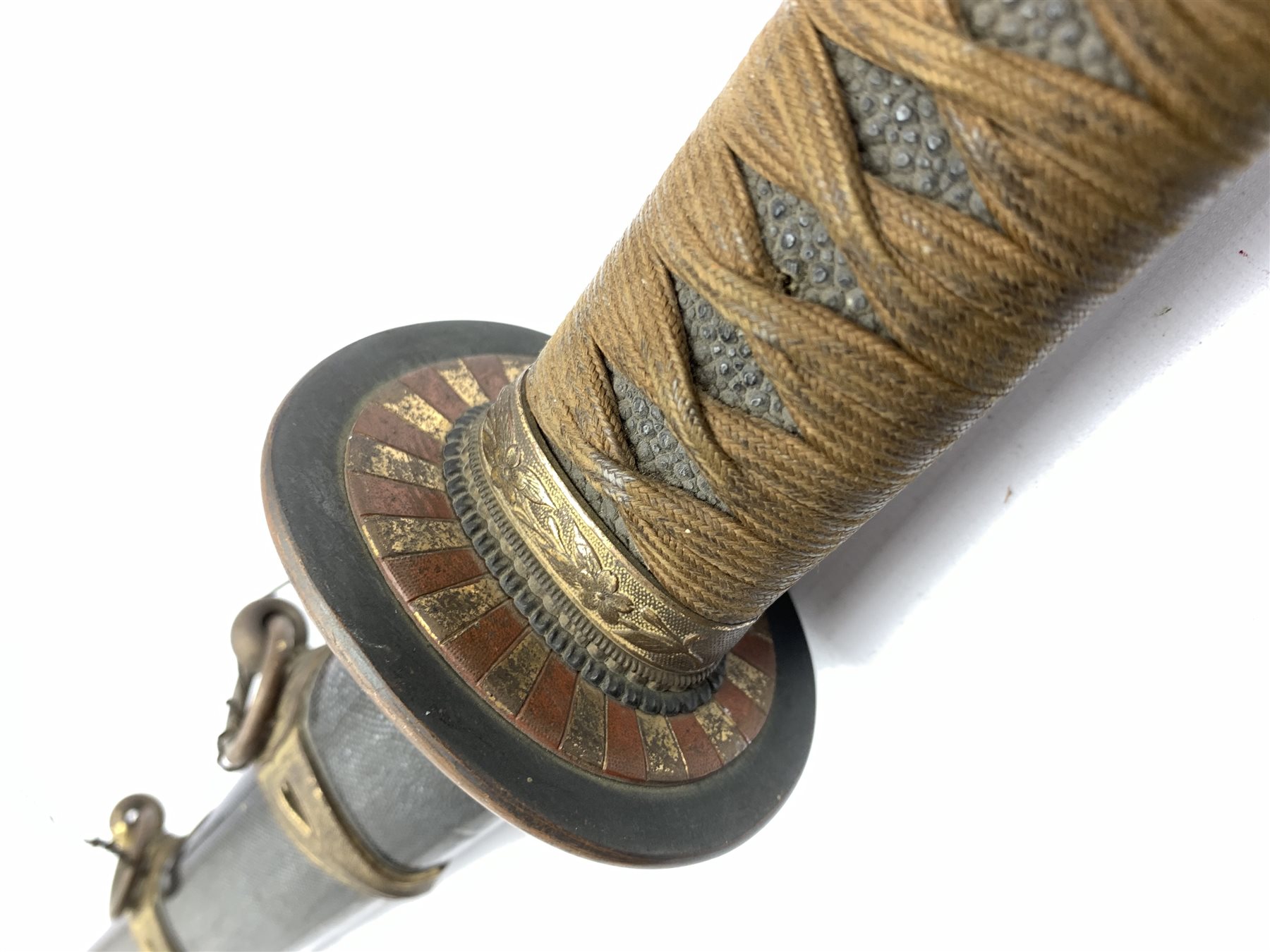
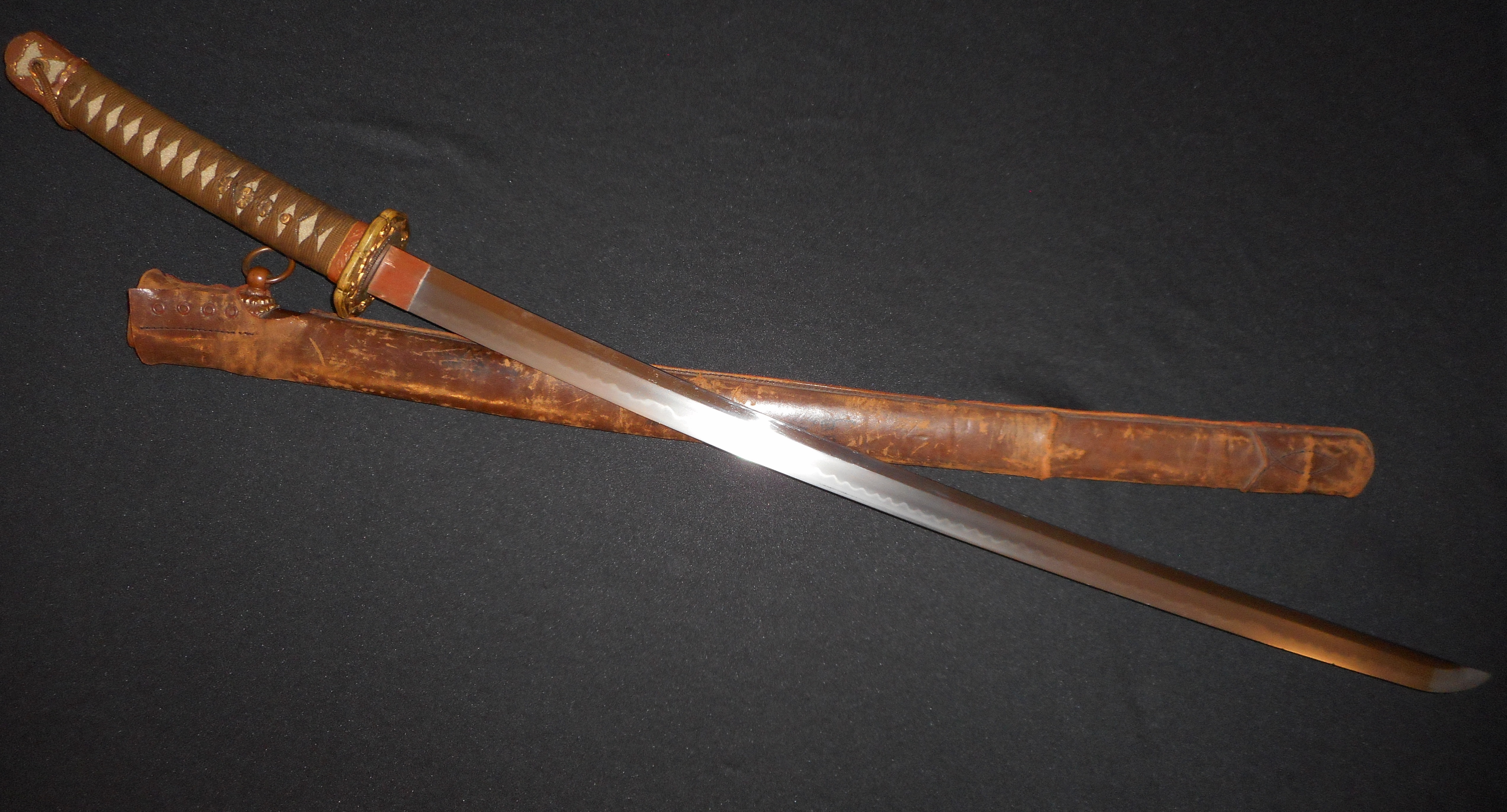
In general, Japanese sword blades of the 1930s and 1940s are well constructed. They feature steel that was forged proficiently and a visible jihada if they receive a new, quality traditional polish. However, in comparing World War II-era swords to older swords and to swords made after 1960, there are clear differences.
WWII Japanese Officers Swords, Japan,
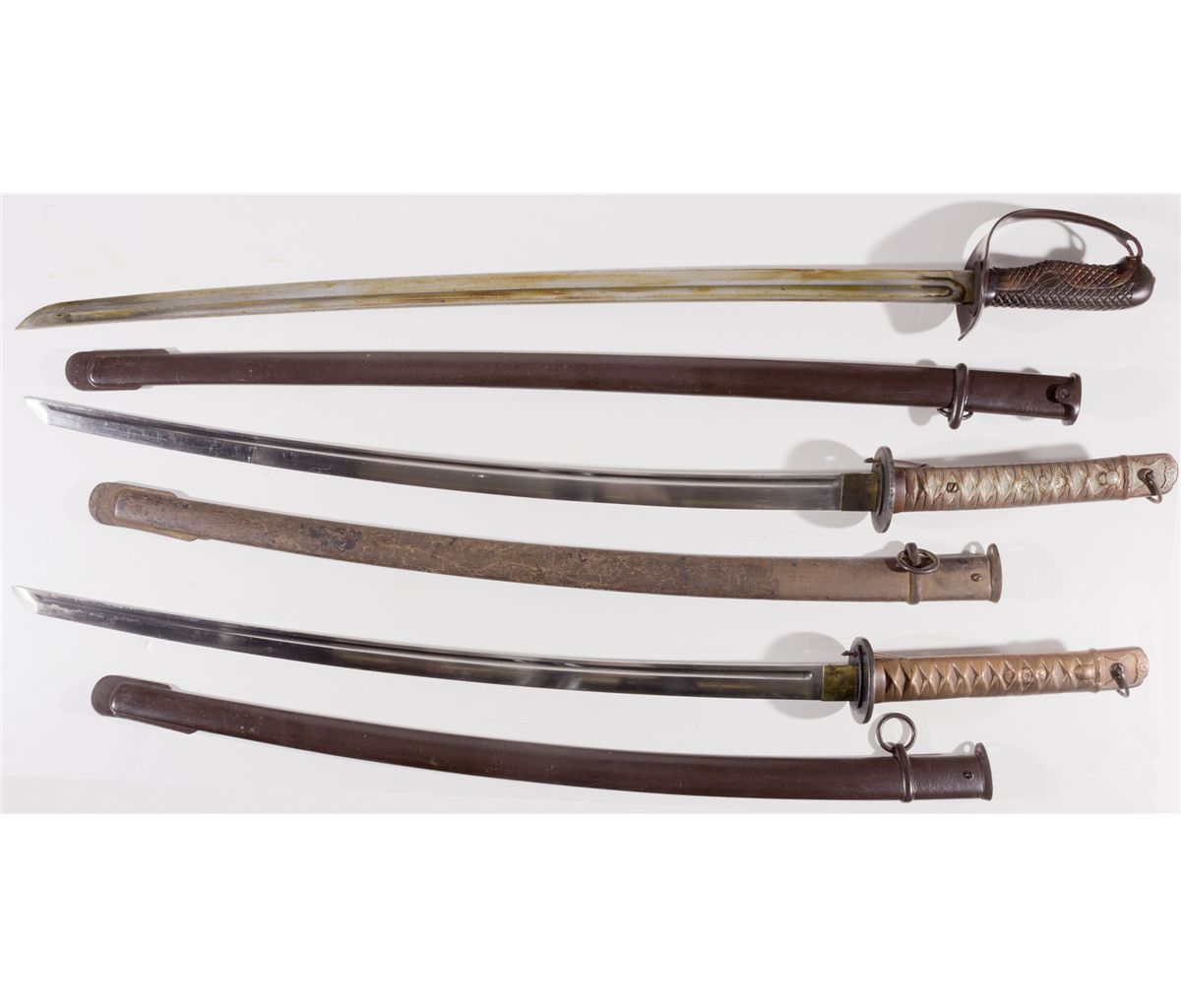
These bladed weapons used by Japanese military leaders in World War II were produced between 1875 and 1934. Because Japan also went to war with China (1894 to 1895) and Russia (1904 to 1905), many historians call Kyu Gunto Sino-Japanese War swords and Russo-Japanese War swords, respectively. The Murata-to is the quintessential Kyu Gunto.
WW2 Japanese NCO Sword Antique/Old WW II Samurai IJA Army Katana MATCHING St Croix Blades
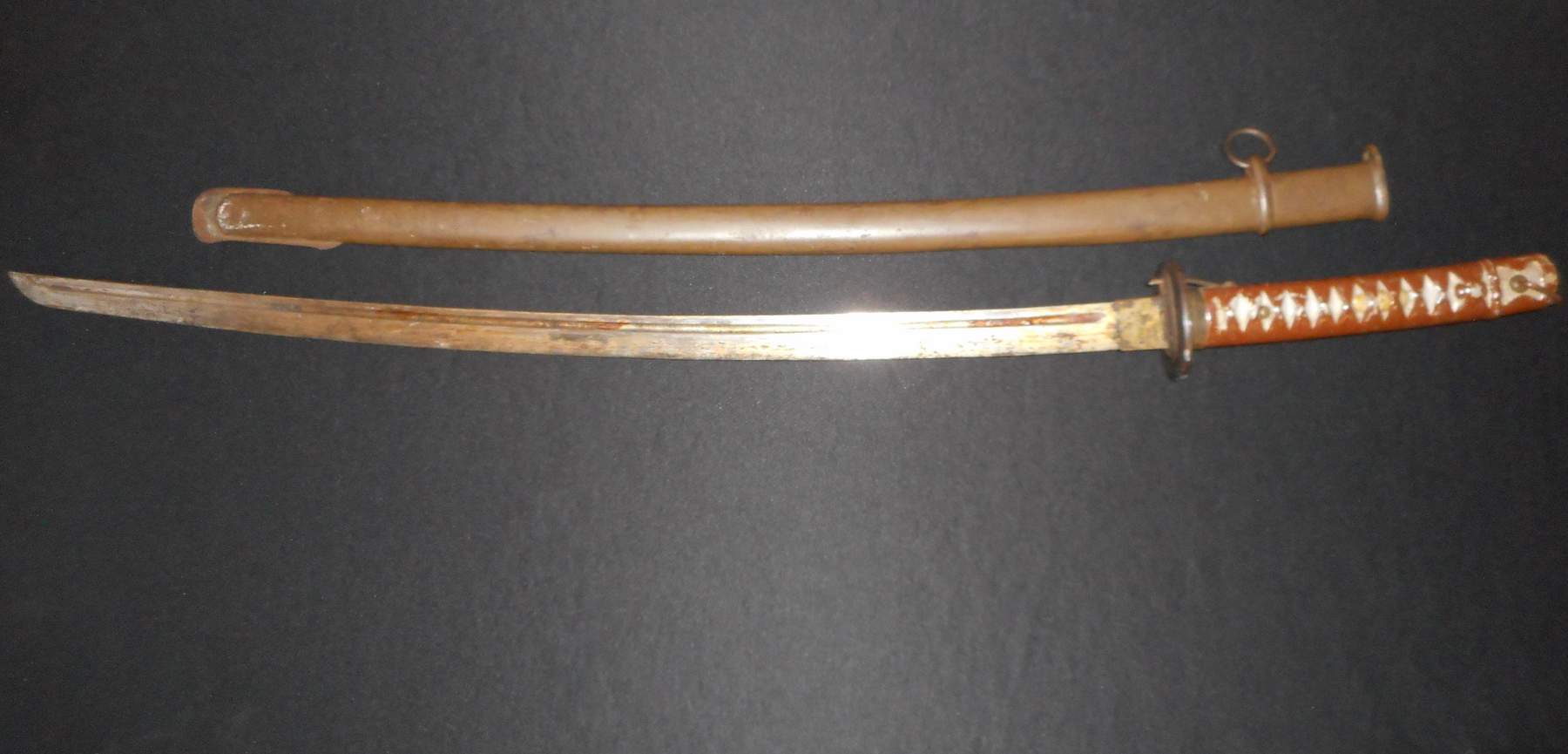
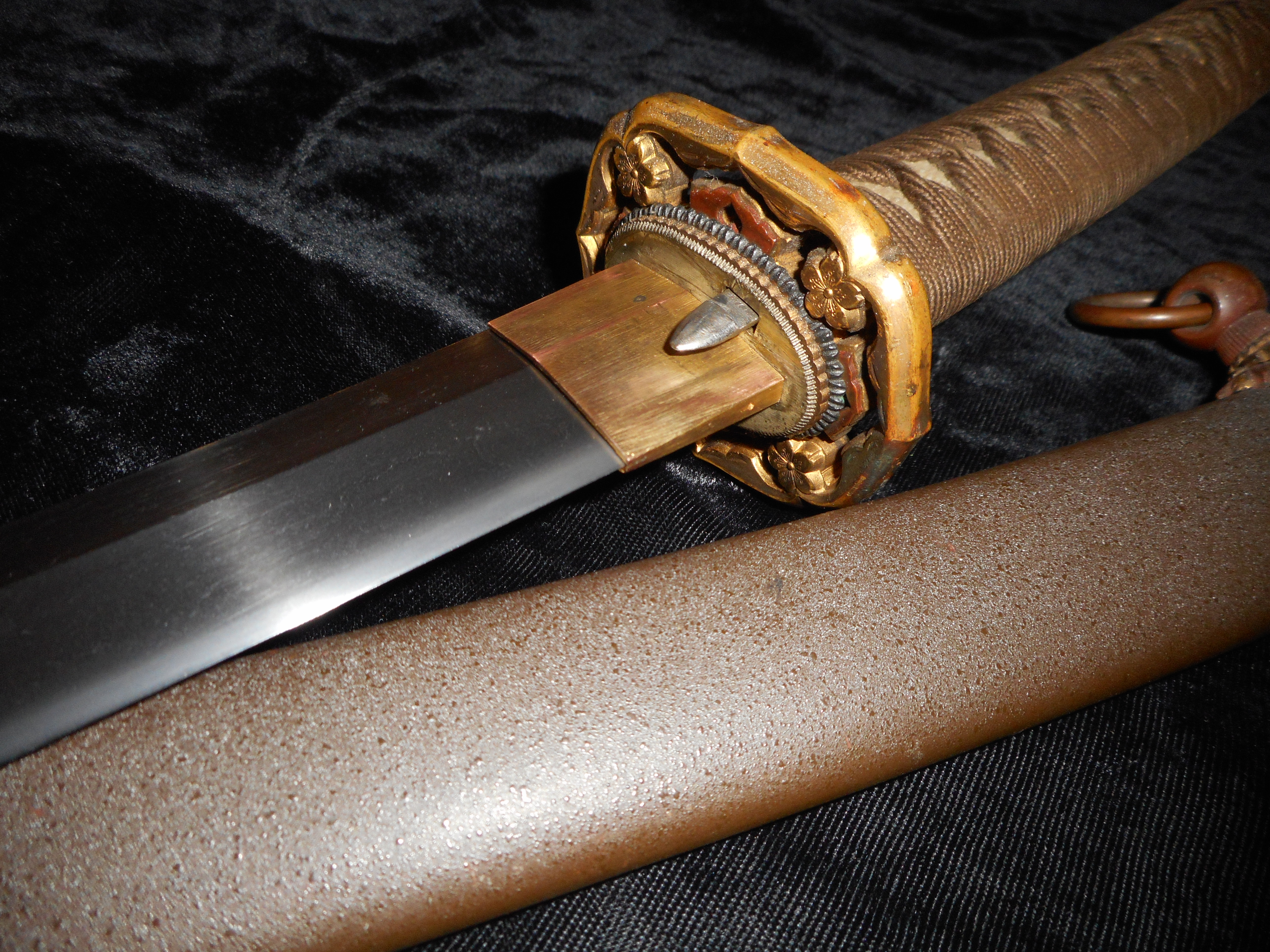
As World War II progressed, more and more changes would be made to the Type 98's design. Painted wooden scabbards replaced metal scabbards as metal had become increasingly precious. The growing dearth of metal also meant that many Type 98 Japanese naval swords were either fitted with cheap brass ornamentation or no ornamentation at all.
Antique Japanese Swords Ww2
While the world has changed much since then, one of the most iconic symbols that existed long before and throughout World War II—and continues to resonate today—is the Japanese sword. A Japanese first lieutenant in a 1930-31 uniform holds an 1886-style kyu-gunto sword mounting.
World War 2 Japanese swords 2 swords value

Most handmade Japanese swords will have a visible grain in the steel of the blade. This is due to the method of forging the blade using multiple folds,etc. Grain (hada) is sometimes difficult for beginners to recognize. There are old sword blades which have no visible grain (muji hada); however, the presence of grain does most certainly mean.
EXCEPTIONAL WW2 Japanese GENDAITO Samurai Sword/Old/Antique Gendai Katana/Samuri St Croix Blades
In this video, Kurt gives us a general broad-brush overview of things to look out for when buying and collecting WW2-era Japanese Samurai Swords, like the di.
WW2 Japanese NCO Sword Antique/Old WW II Samurai Kokura/Army MATCHING LOW ! St Croix Blades
All of these swords are collectible and sought after today. The Yasukuni smiths were among the most important makers of Japanese swords in the World War II era. Among them was Takeshita Yasukuni, maker of this sword in Hokaido in 1943. It is large, heavy and long (27 inches long) for the period and has a complex hamon.
Japanese WWII Shin Gunto Sword with Inscription Edged Weapons Militaria & Weapons
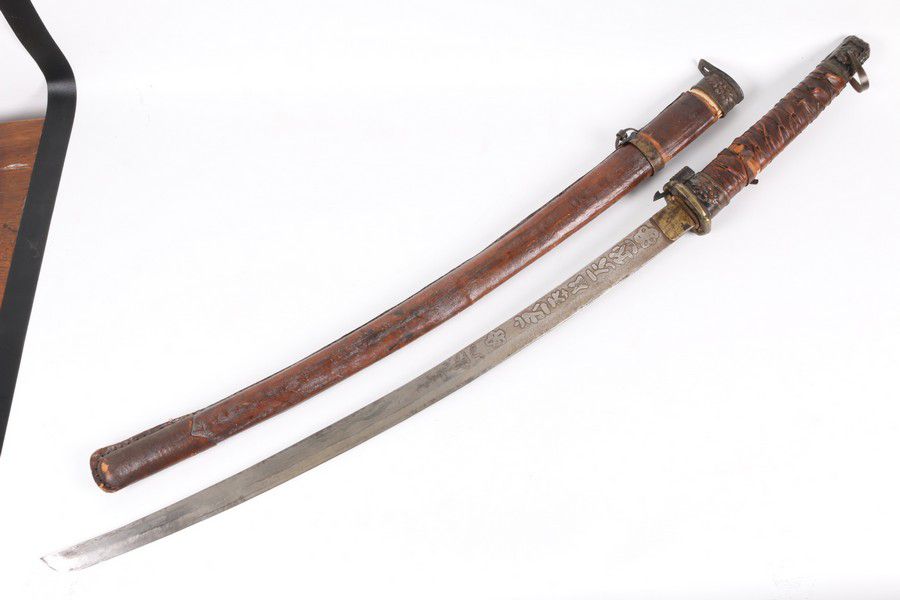
During the pre-World War II military buildup and throughout the war, all Japanese officers were required to wear a sword. Traditionally made swords were produced during this period but, in order to supply such large numbers of swords, blacksmiths with little or no knowledge of traditional Japanese sword manufacture were recruited.
WW2 Japanese Army Officer Samurai Sword Old Gendaito/Tamahagane Kanji St Croix Blades
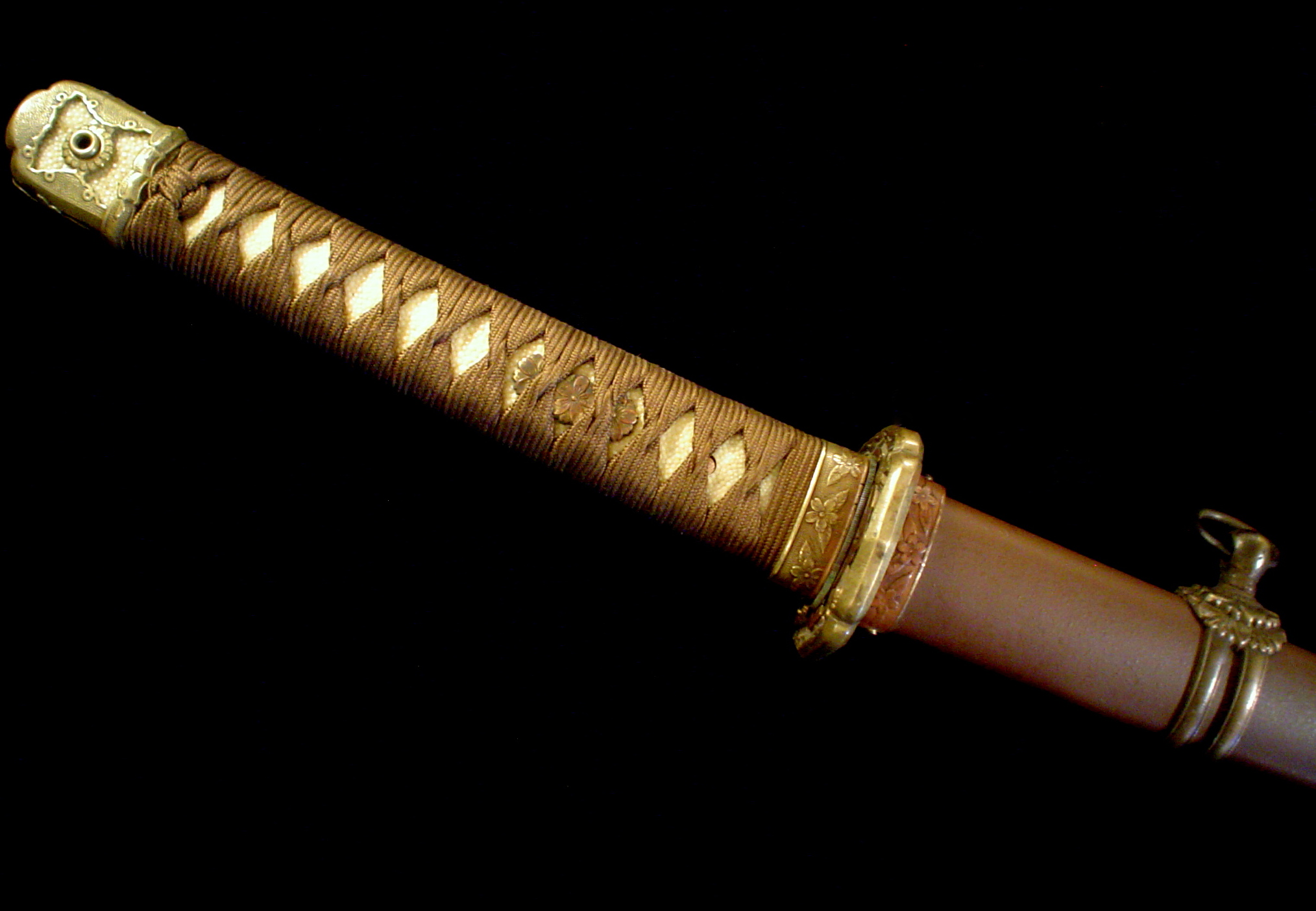
World War Two and Modern Japanese Swords. If you are educated about the history of this weapon to any extent, you have probably heard about the Japanese war swords that were carried by some Japanese soldiers during World War 2. For decades, people have passed around stories regarding Japan's WW2 swords. Many people have repeated the old.
World War 2 Japanese swords 2 swords value

By World War II, guns, tanks, planes, and aircraft carriers dominated warfare. While the sword no longer ruled the battlefield, this weapon still occupied an important ceremonial position in the armies that participated in WW2, particularly in the Japanese military and could be used to kill in close combat situations when all other options had been exhausted.
DS World War II Japanese officers sword with curved blade and iron tsuba, cotton wound shagreen
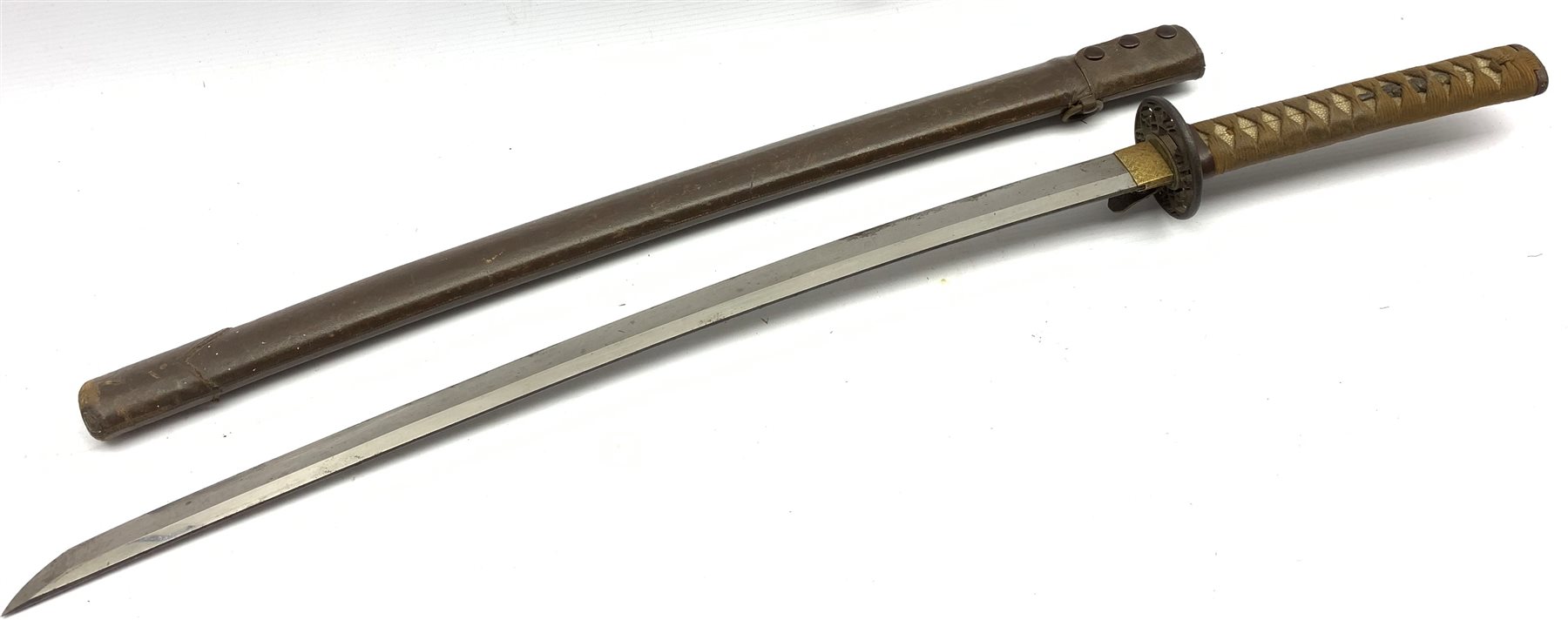
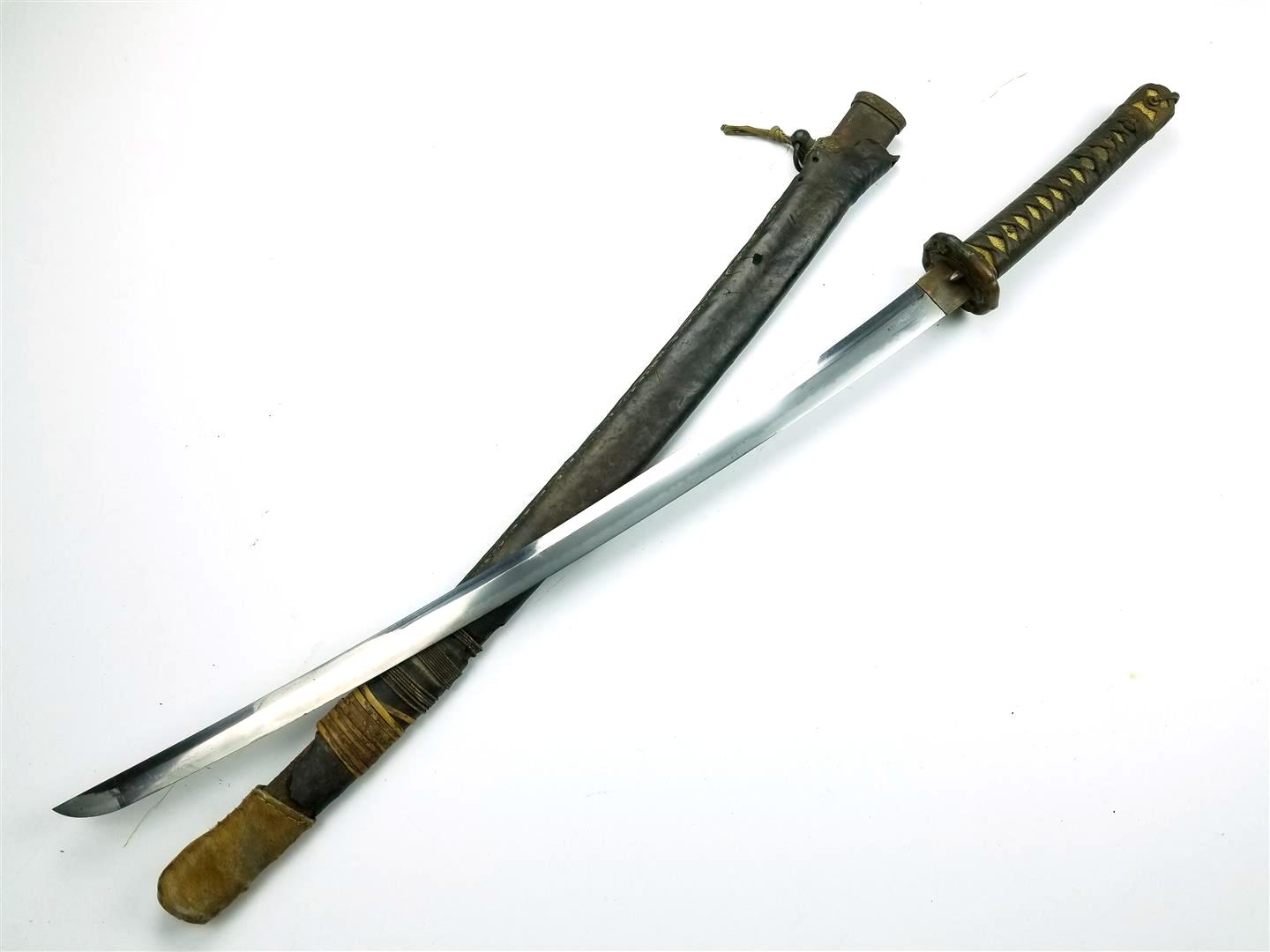
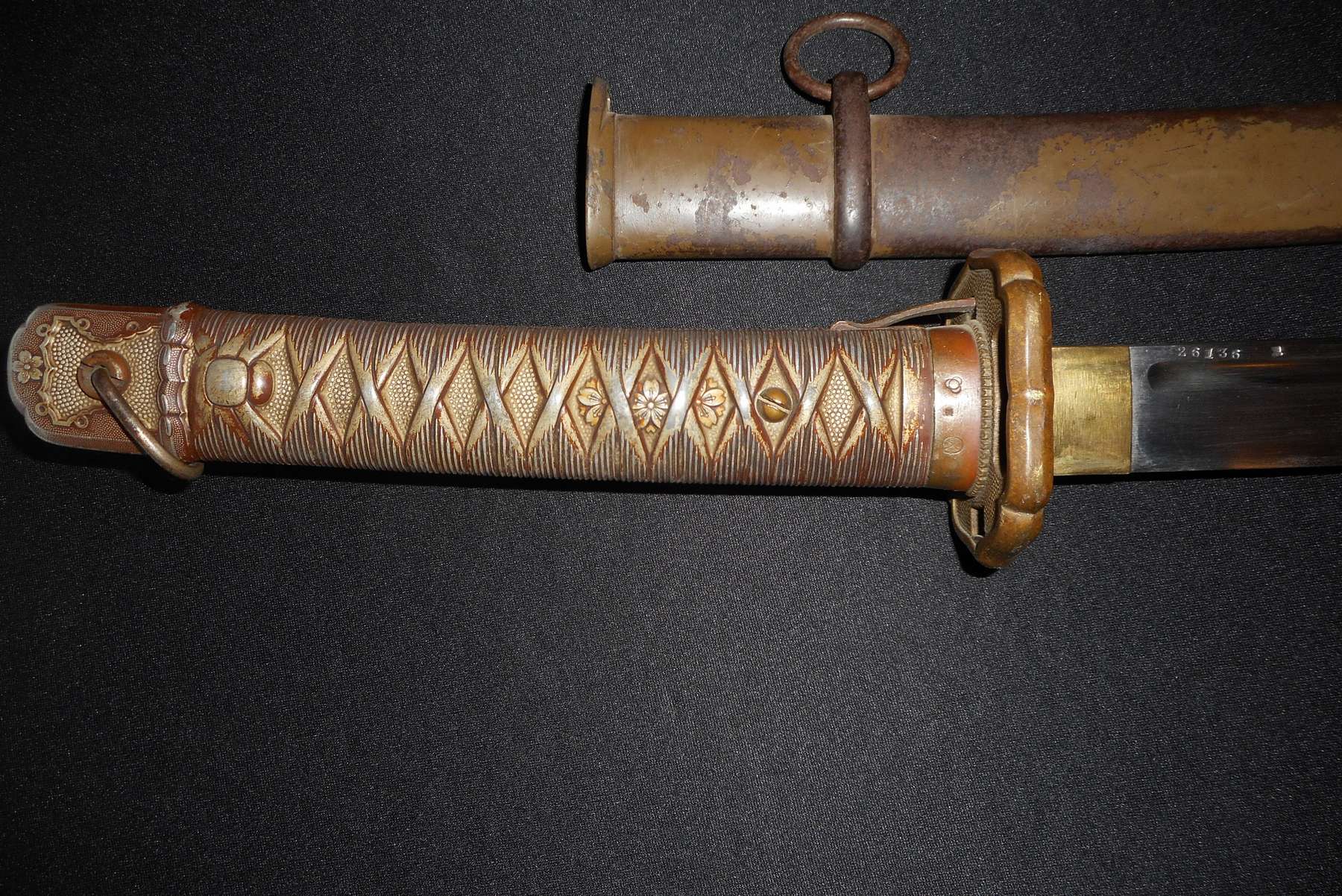
Shin Guntō - The New Military Sword. The new type of military sword also known as the Shin Guntō appeared from 1935 and was used until 1945. They are the most common Japanese military swords from the Second World War. The difference from the Kyū guntō is immediately apparent: Japan's rising nationalism and pride required a return to the old roots.
Antiques Atlas Japanese World War 2 Sword

Japanese WWII Carbon Steel Type 98 Katana: East Asia, Japan, World War II period, ca. 1938 to 1945 CE. An elegant Japanese officer's sword, known as a type 98 gunto katana, presenting with a long carbon steel blade in a lustrous hue of silver with a tapered top and brass base attached to a skillfully wrapped cotton-bound handle of sting ray skin.
End of Edo Yoshitsugu Katana with WWII Officer’s Leather Scabbard (SOLD) « Unique Japan
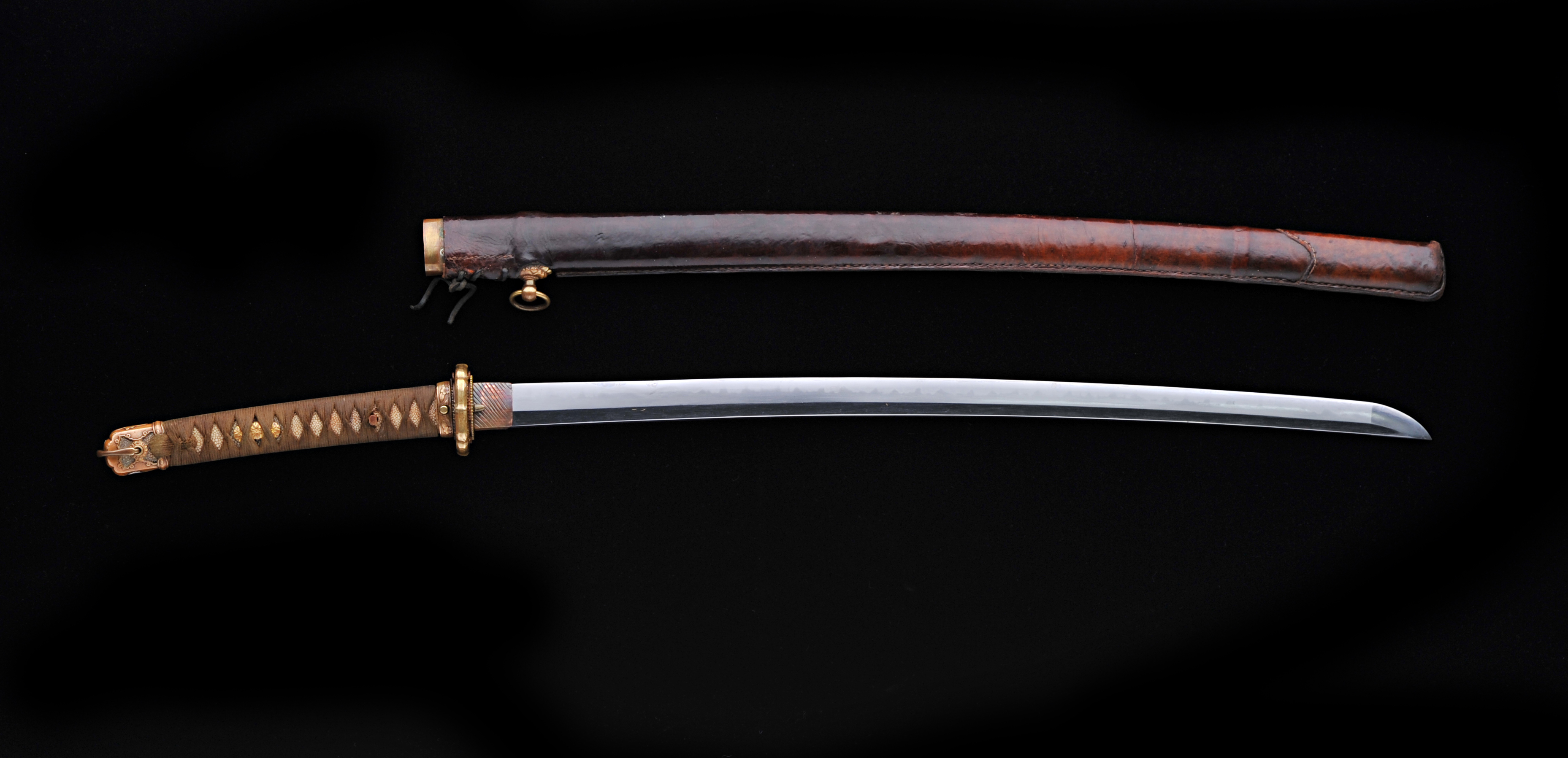
Russo-Japanese Style Mounts. Kyu-gunto swords, also called Russo-Japanese swords, were used by Army, Cavalry and Naval officers during the Russo-Japanese War and WW II. This style of mounting was used from 1883 until 1945. Like shin-gunto, a great variety of quality in both blades, traditional and machine made, and mounts is seen in kyu-gunto.
DS World War II Japanese officers sword with curved blade and iron tsuba, cotton wound shagreen
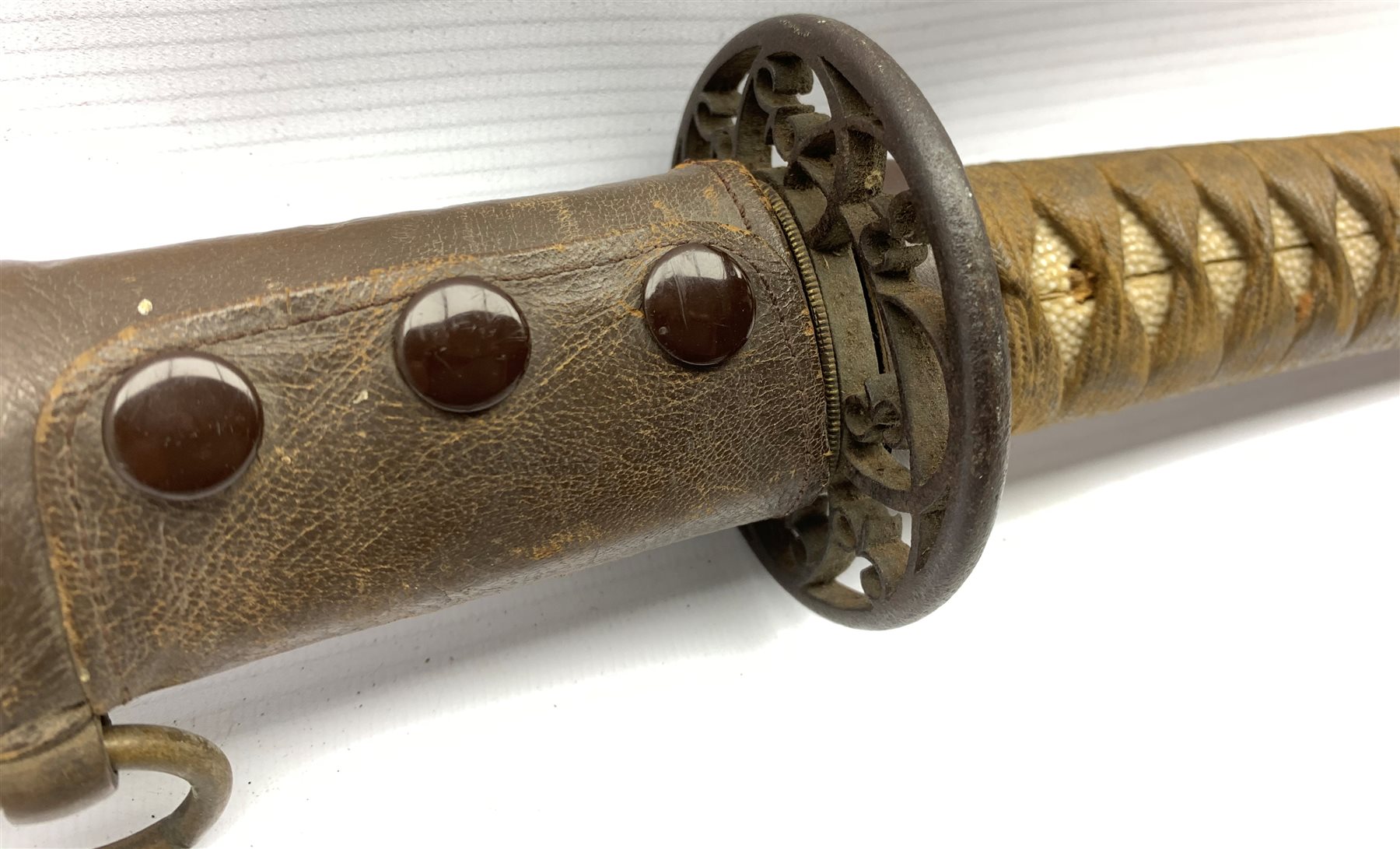
All three swords featured in this post share several commonalities, but the similarity that most informs the design of the first two blades is that they were used by Japanese officers during World War II. Most World War II-era officer swords were mass-produced, machine-made blades; these, however, were simply retrofitted for use in a 20th.
.